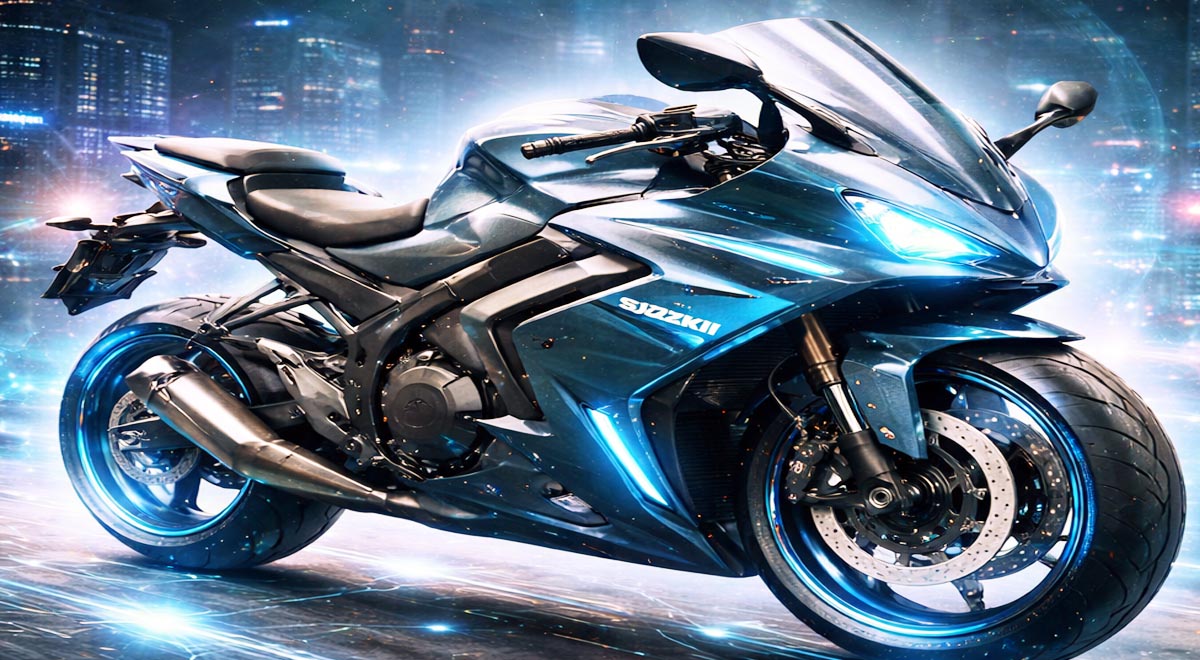
How Artificial Intelligence Is Shaping the Future of Motorcycles
A New Chapter for Suzuki and Motorcycling
The motorcycle industry is entering a transformative era, and Suzuki’s latest AI‑powered bike signals a bold step into the future. Long known for reliability, performance, and racing heritage, Suzuki is now blending advanced artificial intelligence with real‑world riding needs. This isn’t just about adding screens or sensors—it’s about creating a motorcycle that thinks, learns, and adapts to its rider.
As Google Discover users increasingly engage with stories about smart vehicles, AI, and future mobility, Suzuki’s move into AI‑driven technology places it at the center of a rapidly evolving conversation. This article explores Suzuki’s new AI technology in depth, what it means for riders, and why it could redefine the motorcycle experience over the next decade.
The Rise of AI in Two‑Wheeled Mobility
Artificial intelligence has already transformed cars, smartphones, and smart homes. Motorcycles, however, have traditionally lagged behind due to safety concerns, cost, and the need for direct rider control. That gap is now closing.
Modern riders want:
- Smarter safety systems
- Personalized riding experiences
- Better fuel efficiency
- Predictive maintenance
- Seamless smartphone integration
Suzuki’s AI initiative answers these demands by embedding intelligence directly into the bike’s core systems rather than layering it on as an accessory.
What Makes Suzuki’s New Bike “AI‑Powered”?
Unlike traditional electronic rider aids, Suzuki’s AI technology is built to learn continuously. The system uses real‑time data combined with machine learning algorithms to understand riding behavior and environmental conditions.
Key AI Features Include:
1. Adaptive Riding Intelligence
The bike analyzes throttle input, braking patterns, lean angles, road conditions, and traffic behavior. Over time, it adapts power delivery and traction response to match the rider’s style—whether aggressive, relaxed, or touring‑focused.
2. Smart Safety Prediction
Instead of reacting only when traction is lost, Suzuki’s AI anticipates risky situations. It can:
- Adjust traction control before wheel slip occurs
- Optimize ABS response for wet or uneven roads
- Alert riders to potential hazards ahead
This proactive approach significantly improves safety without removing rider control.
AI‑Enhanced Rider Assistance Systems
Suzuki’s new bike goes beyond basic electronic aids.
Intelligent Cruise Control
AI cruise control adapts speed not just to traffic but also to road curvature, elevation changes, and rider fatigue indicators.
Context‑Aware Riding Modes
Traditional riding modes are static. Suzuki’s AI modes evolve dynamically, switching between sport, comfort, and efficiency based on real‑time conditions.
Emergency Response Intelligence
In the event of an accident, the system can:
- Detect abnormal motion patterns
- Automatically send location data to emergency contacts
- Provide diagnostic data to first responders
Design Meets Intelligence
Suzuki has ensured that AI enhances the riding experience without overwhelming the rider.
Clean, Minimalist Interface
The dashboard presents only essential information, while deeper analytics are accessible via a companion app.
Voice‑Enabled Controls
Riders can adjust settings, request navigation assistance, or check system status using voice commands—keeping hands on the handlebars and eyes on the road.
Performance Gains Through AI Optimization
AI isn’t just about safety—it’s also about performance.
Engine Mapping That Learns
The bike’s engine control unit continuously refines fuel injection and ignition timing based on riding patterns, improving:
- Acceleration smoothness
- Fuel efficiency
- Long‑term engine health
Suspension That Thinks
AI‑controlled suspension adapts to:
- Rider weight
- Road texture
- Speed and lean angle
This delivers a consistently balanced ride across city streets, highways, and twisty mountain roads.
Connectivity and the Suzuki AI Ecosystem
Suzuki’s AI bike is designed as part of a connected ecosystem.
Smartphone Integration
The companion app allows riders to:
- Review ride analytics
- Receive maintenance alerts
- Customize AI behavior
- Update software wirelessly
Cloud‑Based Learning
Aggregated, anonymized riding data helps Suzuki improve algorithms while respecting rider privacy.
AI and Rider Trust: A Delicate Balance
One of Suzuki’s biggest challenges was ensuring riders trust AI assistance.
Suzuki addressed this by:
- Allowing manual override at all times
- Providing transparent system explanations
- Gradually introducing AI interventions
The result is technology that supports rather than controls the rider.
How Suzuki’s AI Bike Compares to Competitors
While other manufacturers offer advanced electronics, Suzuki’s approach stands out because:
- AI adapts continuously, not pre‑programmed only
- Systems are integrated holistically
- Focus remains on rider feel, not automation
This positions Suzuki competitively against European and Japanese rivals entering the smart motorcycle space.
Environmental Impact and Efficiency
AI optimization also supports sustainability.
Benefits include:
- Reduced fuel consumption
- Lower emissions through precise combustion control
- Longer component lifespan
These gains align with global regulatory trends and environmentally conscious riders.
Potential Challenges and Concerns
Despite its promise, AI in motorcycles raises valid questions:
- Cost of ownership
- Long‑term software support
- Data privacy
- Repair complexity
Suzuki has emphasized affordability and long‑term support to address these concerns.
Who Is This Bike For?
Suzuki’s AI‑powered bike appeals to:
- Tech‑savvy riders
- Daily commuters
- Touring enthusiasts
- Safety‑focused beginners
- Experienced riders seeking refinement
By balancing intelligence with control, Suzuki avoids alienating traditional motorcyclists.
Market Impact and Industry Implications
Suzuki’s move could accelerate AI adoption across the motorcycle industry.
Expected impacts include:
- New safety standards
- Software‑driven upgrades
- Subscription‑based features
- Increased collaboration between tech and motorcycle companies
This bike may be remembered as a turning point.
Future Roadmap: What Comes Next?
Suzuki has hinted at future developments such as:
- AI‑assisted navigation with hazard prediction
- Vehicle‑to‑vehicle communication
- Semi‑autonomous parking assistance
- Advanced rider training analytics
These innovations suggest Suzuki is thinking long‑term.
Why This Story Performs Well on Google Discover
This topic aligns perfectly with Discover trends:
- Emerging technology
- Vehicles and mobility
- AI applications
- Future lifestyle innovation
High‑quality visuals, human storytelling, and practical benefits make it highly engaging.
Suzuki’s new AI‑powered bike represents a thoughtful evolution rather than a radical disruption. By focusing on safety, performance, and rider experience, Suzuki proves that artificial intelligence can enhance motorcycling without compromising its emotional core.
This is not a motorcycle that replaces skill—it’s one that amplifies it. As AI continues to reshape transportation, Suzuki’s approach may well define the blueprint for the next generation of motorcycles.